Repeat safely
Practise rare and critical situations as often as needed — without risk to people or vehicles.

The ACTORACER moves in sync with the image: real actuators rather than mere vibration, developed and manufactured in Windeck. Learner drivers practise vehicle operation, visual scanning and hazardous situations with an almost real driving feel.
230 V
Schuko
Full Motion
Actuators
Windeck
Manufacturing
Practise rare and critical situations as often as needed — without risk to people or vehicles.
Full Motion translates braking, acceleration and cornering forces directly into physical feedback.
Vehicle operation and visual scanning are already familiar before real road traffic demands attention.
A driving school simulator brings situations into the classroom that are rare, costly or dangerous on the road: night driving, fog, aquaplaning, slippery roads, vehicles braking suddenly and wildlife crossings.
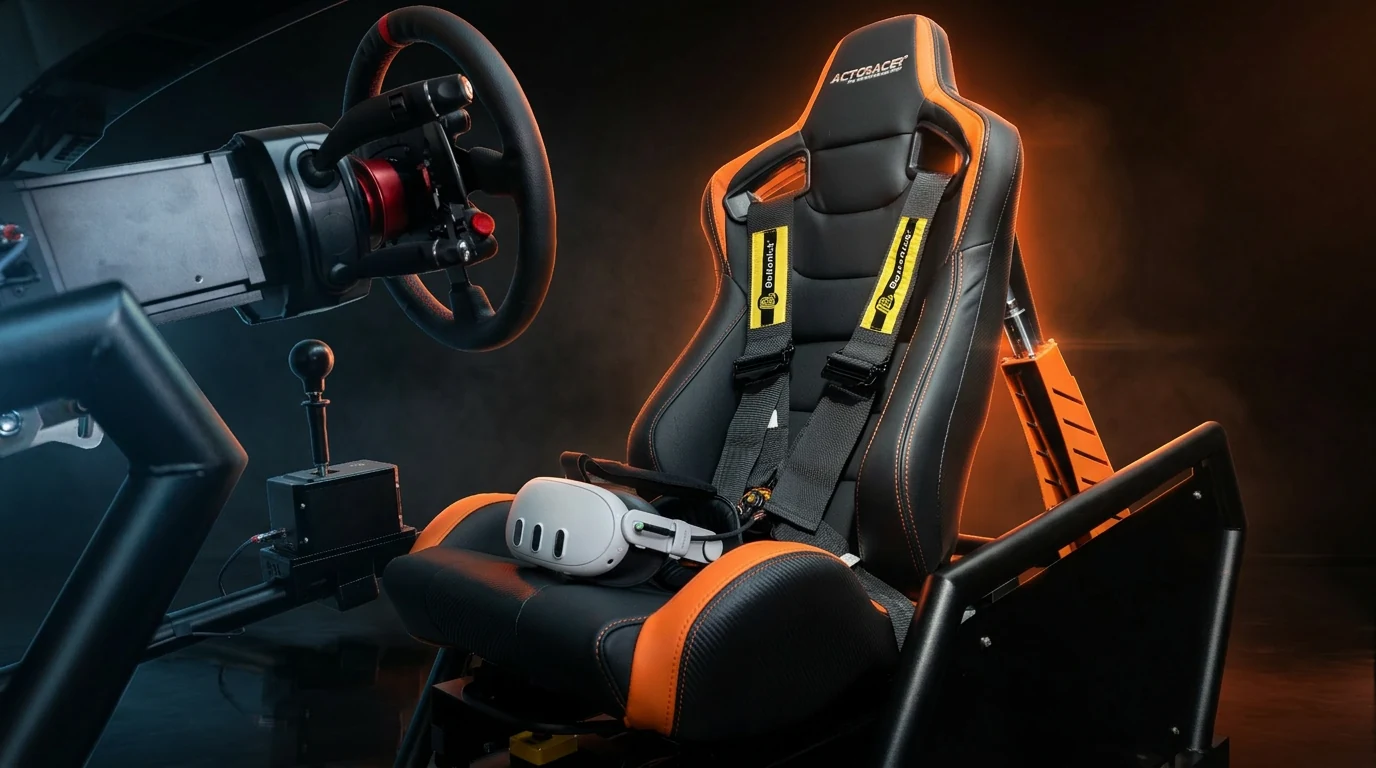
Learner drivers practise seating position, mirrors, over-the-shoulder checks, clutch use and brake modulation until the routines are mastered. The driving instructor can pause any situation, explain it and have it repeated.
The simulator does not replace any driving lesson. It shortens the learning curve beforehand. Find out more under Credit for simulator hours in driver training.
Pause · explain · repeat
A static system only shows movement on screen; the body remains still. A full-motion driving school simulator moves the entire structure: braking pushes forwards, acceleration pushes you into the seat, and a kerb can be felt in your back.
Synchronous feedback
Image and movement match.
Adjustable sensation
Speed and braking become perceptible.
Traction Loss
Physically sense the rear end sliding out.
Less discomfort
Matching stimuli help counter motion sickness.
The ADAC identifies the lack of a sense of centrifugal forces and speed as a key weakness of conventional devices. See the comparison of full-motion and static driving school simulators and the explanation of how nausea in the driving simulator can be avoided.
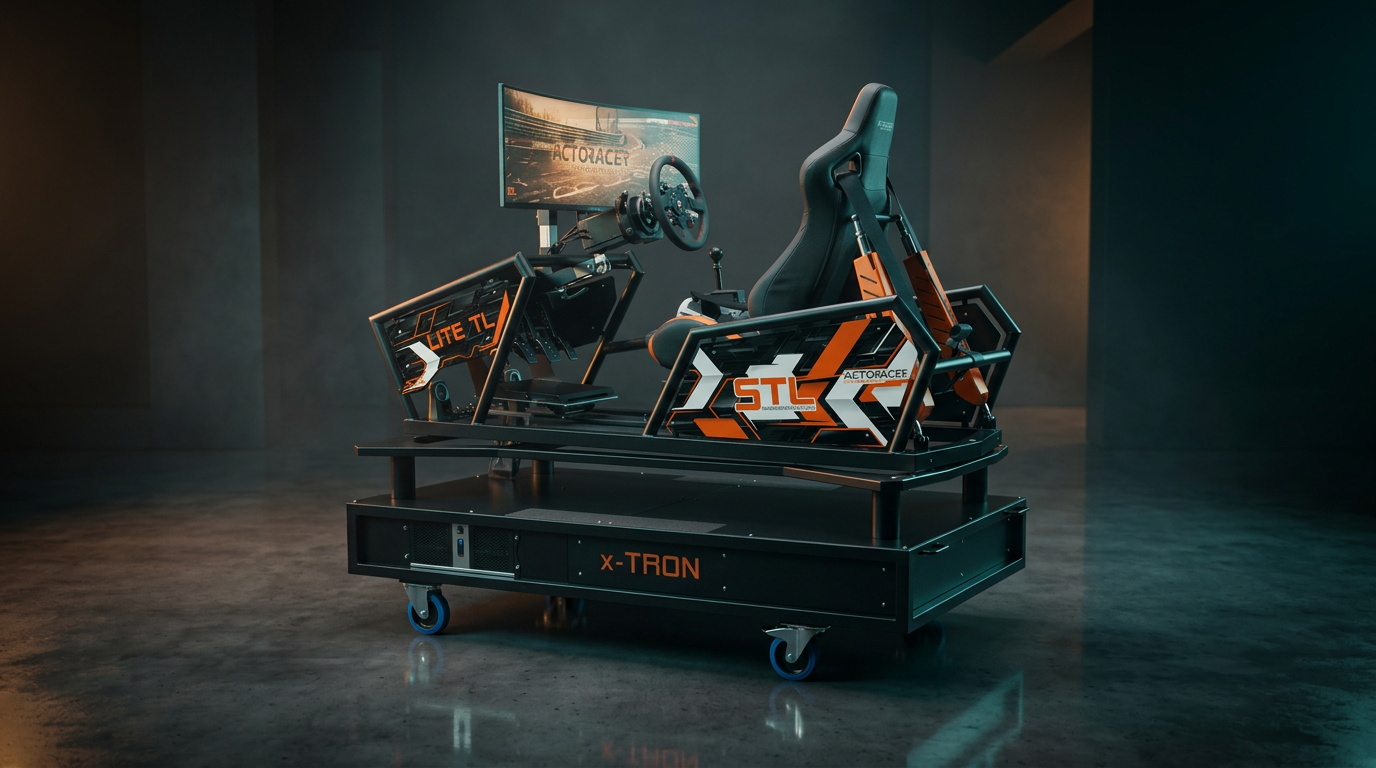
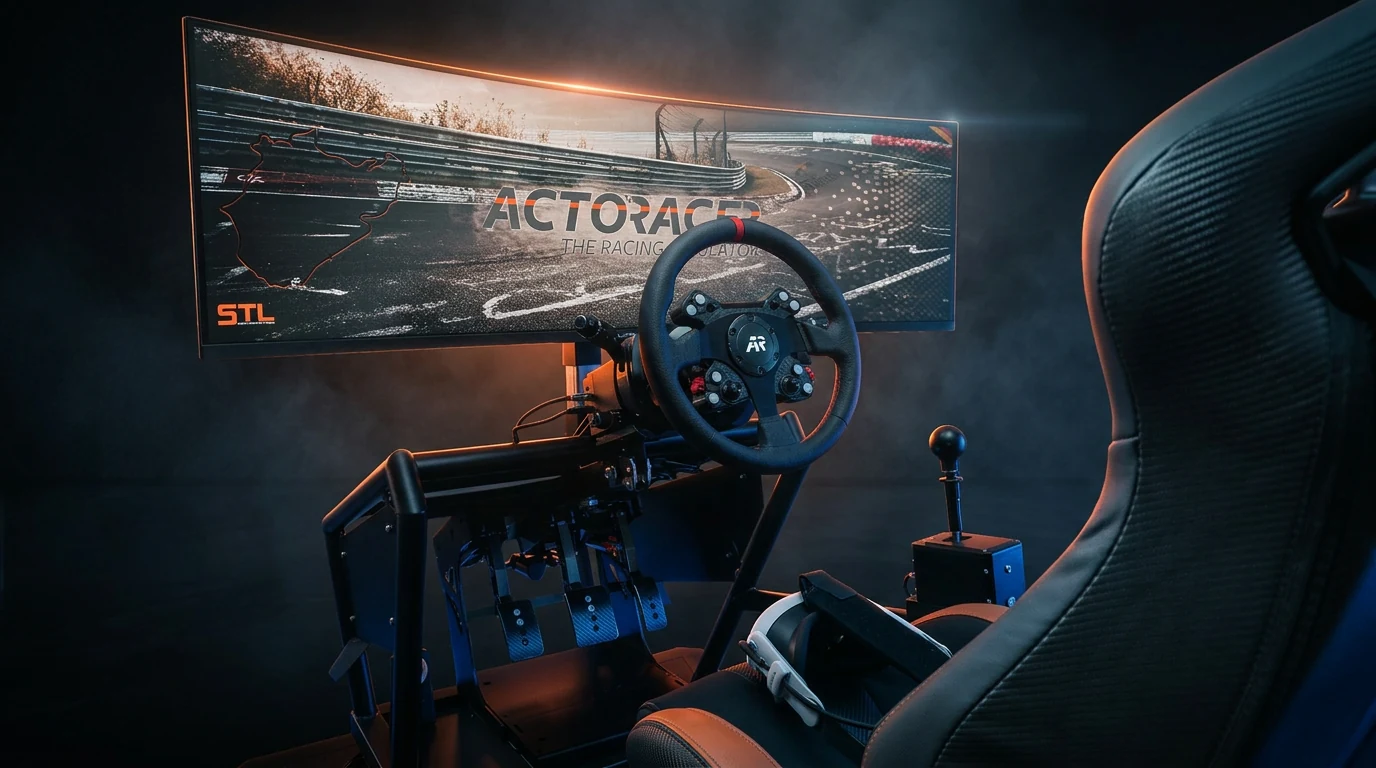
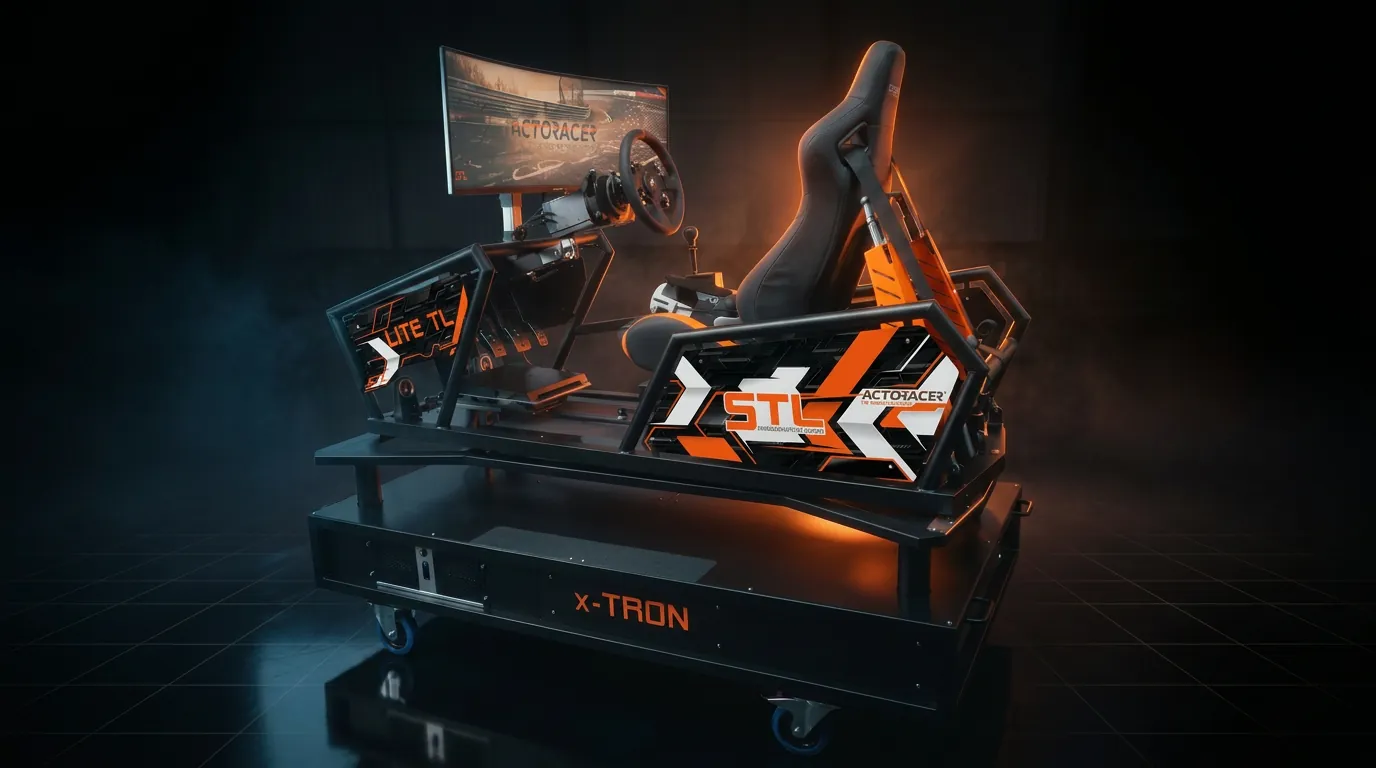
Compact for the theory classroom or an enclosed premium solution for the customer area — both systems come with driving school software, a round steering wheel and real levers.
 01 · Driving school
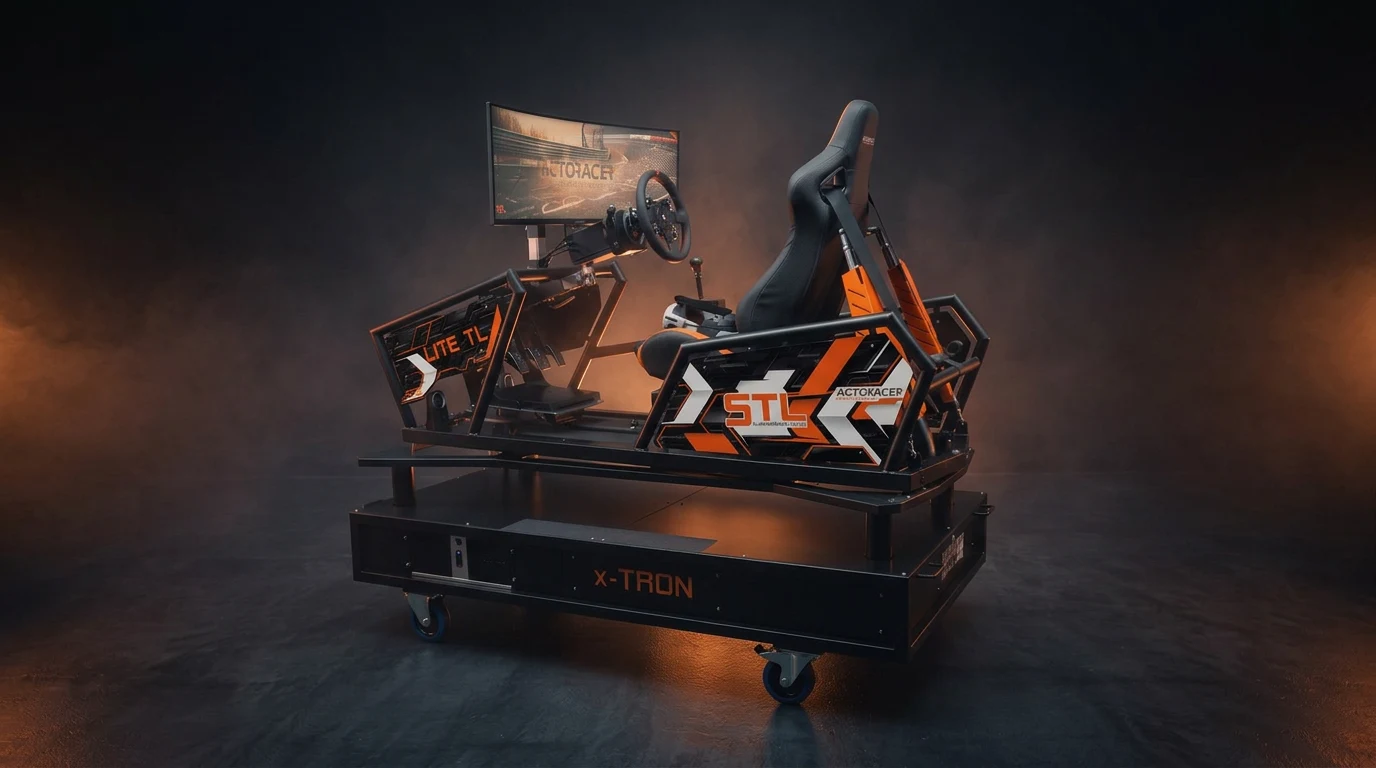
The compact solution with Seat-Mover and Traction Loss — suited to the theory classroom and transportable through standard doors.
 02 · Driving school
The enclosed premium version with direct-drive steering and hydraulic pedals for a visible spot in the customer area.
All dimensions and the checklist for the installation site can be found under Space requirements and technical prerequisites.
2 to 4 sessions before the first driving lesson build routine. Beyond this, the simulator opens up services for returning drivers and people who hold a driving licence.
Vehicle operation, visual scanning and basic driving exercises before the first drive.
A protected introduction with continuously adjustable movement and no traffic pressure.
Experience slippery roads, aquaplaning, wildlife crossings and emergency braking in a controlled setting.
Regain routine and practise challenging situations again in a targeted way.
Further reading: Address driving anxiety in a protected setting and Practise hazardous situations in a controlled setting.
Purchase · leasing · rental
Predictable use
The simulator works while the driving school car stands idle. With 20 simulator sessions per week lasting 45 minutes each, it provides 15 hours of training without fuel, wear or tying up a vehicle; electricity costs are 5 to 9 euros per week. From around 10 to 12 sessions sold per week, the simulator covers a lease payment from its own revenue.
Driving school simulators differ primarily in four areas: movement, response speed, steering and brake feel, and the representation of German traffic rules.
The impartial checklist with 24 checkpoints helps with comparisons. Ideas for positioning can be found under Modernise your driving school.
Does the system move only the seat or the entire structure?
Does the platform follow the image without noticeable delay?
Do the steering and pedals convey a dependable feel?
Do the exercises and assessment fit driving school training?
A clear path from the first conversation to a ready-to-use driving school simulator — with direct support from the manufacturer.
Location, room layout and desired scope of training.
Model recommendation and test drive in Windeck or at a centre.
Compare purchase, leasing or rental options in writing.
System configuration and manufacturing in Germany.
Delivery, installation and on-site instruction for driving instructors.
Software updates and support throughout the entire term.
Every step in detail under Buying a driving school simulator: the manufacturer's process.
A full-motion system moves the learner driver in sync with the image: braking pushes forwards, corners tilt to the side, and slippery conditions can be felt as the rear end sliding out. A static system only shows the same situations on screen and conveys no sense of speed or brake modulation.
No. Special driving lessons and the driving test take place in a real vehicle. The simulator supplements training before the first driving lesson, during basic driving exercises and in hazard training, making lessons in the car more efficient.
The compact LITE TL Driving School (87 × 210 cm, 170 kg) with Seat-Mover and Traction Loss for the theory classroom, and the enclosed x-TRON Driving School (112 × 220 cm, 400 kg) with direct-drive steering and hydraulic pedals for the customer area.
Around 6 m² for the LITE TL and around 8 m² for the x-TRON, including space for movement and access, a level floor and a standard 230-V Schuko socket. A three-phase power connection is not required.
Yes. In addition to purchase, there is leasing over 36 to 60 months, hire purchase and long-term rental from 6 months — all directly through the manufacturer.
By appointment at the showroom in Windeck near Cologne and at over 40 sim centres in Germany, Austria, Switzerland and other countries. Locations are listed in the centre overview.
The right model, room layout and financing are best assessed after a drive of your own — at the showroom in Windeck or at a nearby centre.